






Liquorice recipes - what´s inside ?
Liquorice as a sweet
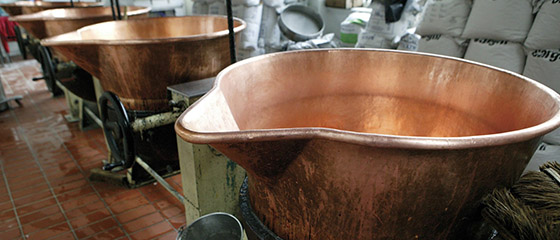
Liquorice as a sweet is produced by further cooking the liquorice extract with the following ingredients:
- Sugar, glucose syrup and starch (wheat, rice, corn) form the basis of liquorice.
- Liquorice extract. Only with the plant ingredient liquorice root is liquorice truly liquorice.
- Gelling agents (gum arabic, gelatin, pectin) together with flour (wheat, rice, corn) give it the desired consistency.
- Flavourings (aniseed, coconut, raspberry, violet, vanilla, honey, salt, sal ammoniac) give liquorice its flavour.
- Colourings: Carbon = E153 is the natural black plant colouring in liquorice. Other food colourings are used in coloured liquorice.
- Coating agents (aniseed oil, sunflower oil, palm oil, carnauba wax or beeswax) prevent drying out and clumping.
Glucose syrup
Glucose is a simple sugar, or grape sugar. Glucose syrup is obtained from corn or wheat starch. Glucose syrup has a lower sweetness than sugar and blends well with other ingredients. It is suitable for use as a consistency agent in beverages and ice cream, confectionery, jams, baked goods, dairy products and in the production of liquorice.
Liquorice extract
Liquorice extract, pure liquorice, is produced by boiling liquorice roots. This releases plant carbon, which is the natural black colouring (E 153) in liquorice. Pure liquorice is a plant-based, vegan natural product with a hard candy-like consistency and a sweet-bitter taste. It is used worldwide as a medicine, see Is pure liquorice healthy?
Gum arabic
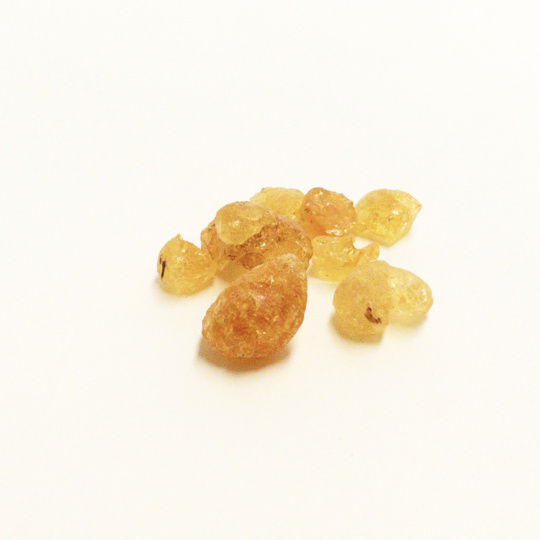
Gum arabic is the resinous sap of some acacia tree species and is therefore a vegetable gelling agent. The resin from Sudan is often used in the manufacture of confectionery. To obtain the resin, the trunk of the acacia tree is cut open, the resin is removed, purified and processed for use in the food and confectionery industry. Gum arabic is a natural product and an ingredient that has its price because - depending on the annual harvest - it is not available in unlimited quantities.
Gelatine
Gelatine is a high-quality, low-calorie and low-fat protein, free from cholesterol and sugar. Gelatine has hardly any allergenic potential and contains 18 amino acids, 9 of which are essential. Due to its good gelling properties, it is used in the food and confectionery industry, in tablet production and in the photographic paper industry. Gelatine consists mainly of pork rinds and bones, which come from registered slaughterhouses and are cooked and cleaned several times at high temperatures during the production process.
If you would like to get to know the gelatine-free liquorice varieties at kadó, click on the ‘gelatine-free’ button in the flavour category of your choice and all gelatine-free varieties will be displayed. Or get a taste of our gelatine-free range with this liquorice mix from kadó.
Pectin
Pectin is obtained by boiling vegetable raw materials (apples, citrus fruits, beetroot). Its ability to form gels is utilised naturally in the preservation of jam. Pectins are also increasingly being used as a substitute for gelatine in the confectionery and food industry.
Gluten
Gluten, also known as gluten protein, is a cereal protein and is crucial for the baking properties of flour. Cereals and their flours made from maize, buckwheat, rice, millet and potatoes are gluten-free.
If you would like to know which types of liquorice at kadó are gluten-free, you can click on the ‘gluten-free’ button in each flavour category and make your liquorice selection.
Salt and ammonia
Salt liquorice contains table salt (sodium chloride) or sea salt obtained from the sea and ammonium chloride. Salmiac salt has been known as rock salt since ancient times.
What is ‘liquorice for adults’ all about? In Germany, liquorice may not contain more than 2 percent ammonium chloride without a warning. If the proportion of ammonia salt in liquorice is between 2 and 4.49%, liquorice must be labelled as ‘adult liquorice - not suitable for children’ and ‘extra strong, adult liquorice - not suitable for children’ applies to a salt content of 4.49 to 7.99% in liquorice. A high consumption of salt and/or ammonium chloride is not recommended, not only for children.
Carnauba wax
Carnauba wax is scraped from the leaves of the carnauba palm (Copernicia prunifera), which grows in Brazil, then melted and purified. It is mainly used in the food and cosmetics industries, in medicines and as an ingredient in car waxes and polishes. (Source: Wikipedia)