





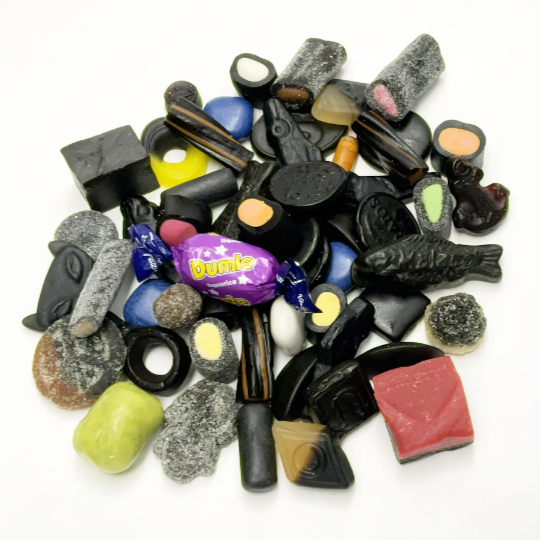
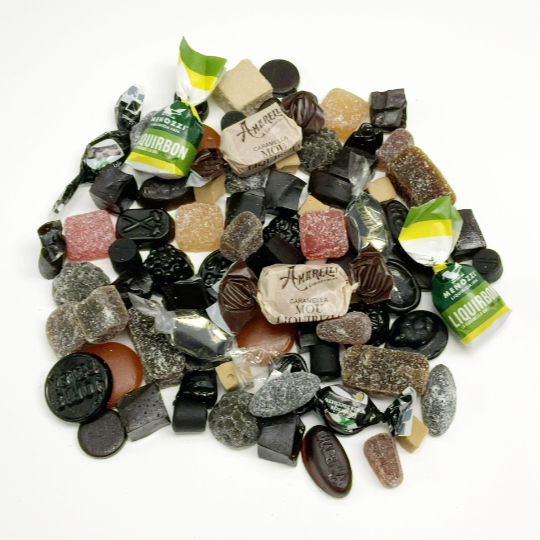
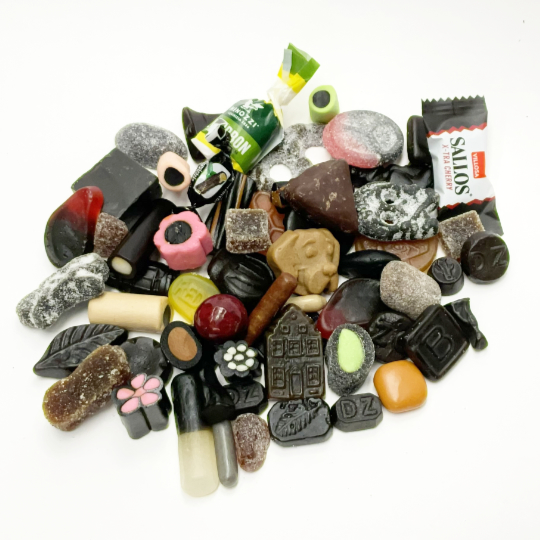
Do ALL Liquorice sweets taste the same?
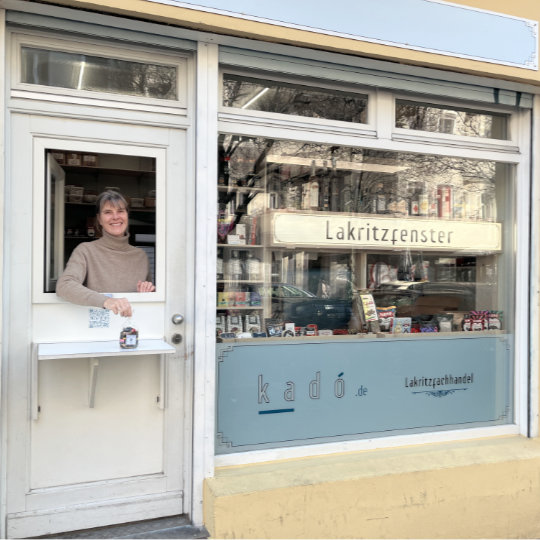
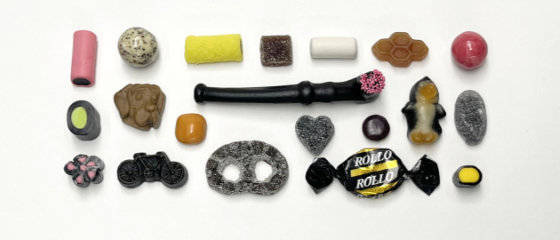
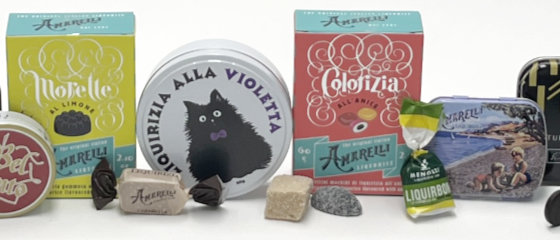
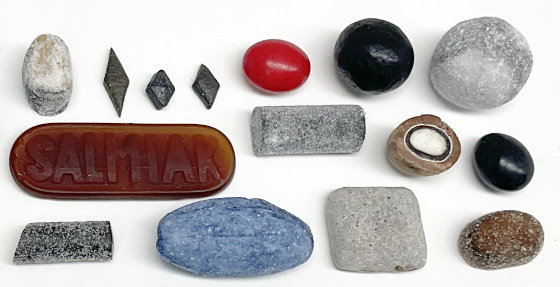
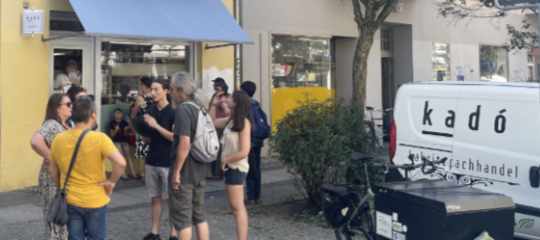
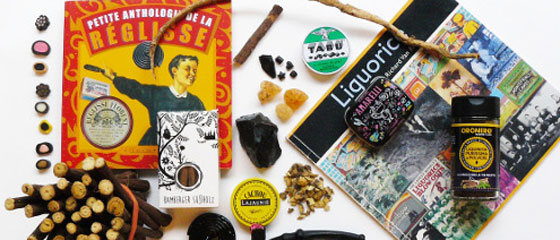
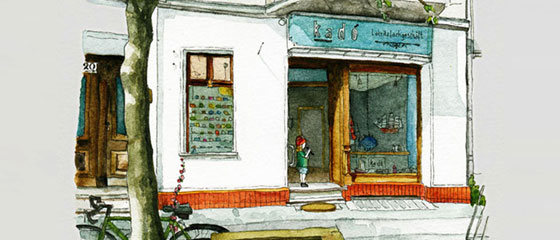
Salmiak (ammonium chloride) is a rock salt. It is industrially produced for the food industry, a white sour-salty tasting fine granulate. A maximum of 7.99 percent salt is permitted in the recipe, this must be labelled as "Extra strong adult liquorice - not children's liquorice".Be honest... they all taste the same, right? ... Of course not! In our nearly 30-year company history, this question has been asked not so rarely. However, our customers can choose from around 600 different types of LiquoriceLiquorice is a natural plant product of the liquorice root. Its black colour comes from the vegetable carbon dissolved in the cooking process. Pure liquorice tastes sweet-tart, bitter. The consistency is hard as candy.! Freshly sourced from the Liquorice-loving countries of Europe. We want to showcase this diversity at kadó. That's why kadó founded Germany's first specialist Liquorice shop in 1997 and has also been running an online shop at www.kado.de since 1998!
Until then, Liquorice was only available from the German company Haribo and sometimes from Katjes at kiosks and in some supermarkets. That was it. For spicy Liquorice, such as salmiak pastilles, you had to go to the pharmacy. That was the situation until 1997. The above question probably comes from this context, as the domestic supply was limited to these two Liquorice companies and shaped the taste of Germans. "Haribo macht Kinder froh und Erwachsene ebenso". Haribo is a word creation by Hans Riegel from Bonn. Popular for its gummy bears, Liquorice wheels, which have shaped our country, were added in 1925.
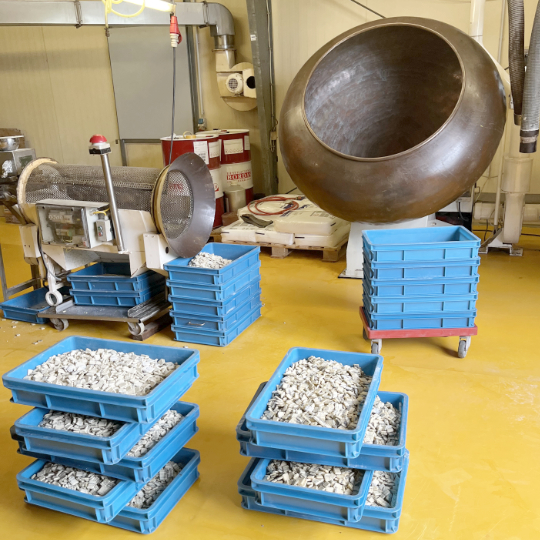
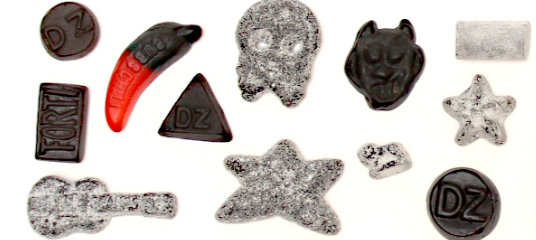
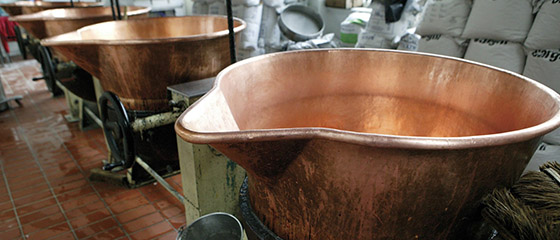
Technically speaking, the taste, ConsistencyThe consistency of a liquorice recipe is determined by the cooking process. Whether it should be crunchy, soft or crumbly is determined by the temperature and the gelling agent used, such as gum arabic, gelatine, pectin, starch (corn, potato, rice, wheat). and shape of a Liquorice recipe are achieved through the cooking process, i.e. using specially designed machinery. Should the Liquorice be very soft and smooth, sprinkled with sugar? Or a roll with a filling or coating? Should it be coated or remain black and chewy? Should it be rolled, twisted, punched, moulded, cut... depending on this, the appropriate process technology is purchased. The quality of the Liquorice is reflected in the ingredients and the flavouring used. Natural[[ flavour]]ings are expensive because naturally limited quantities determine the price.
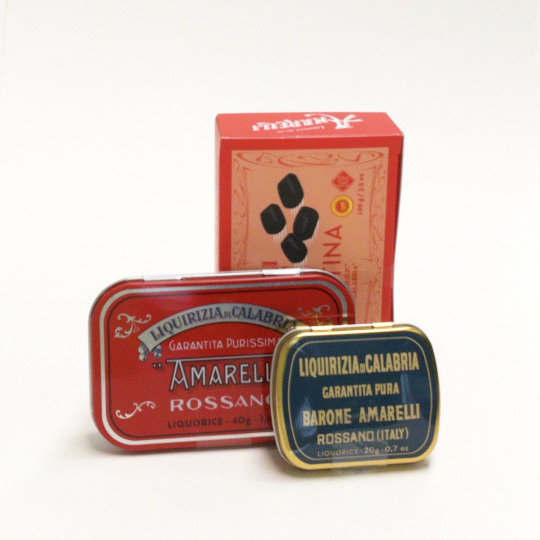
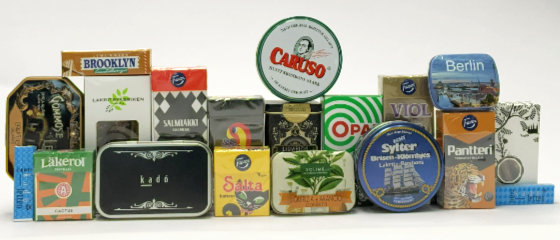
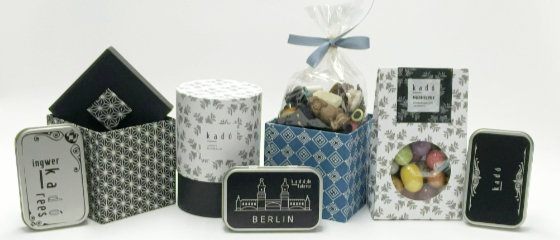
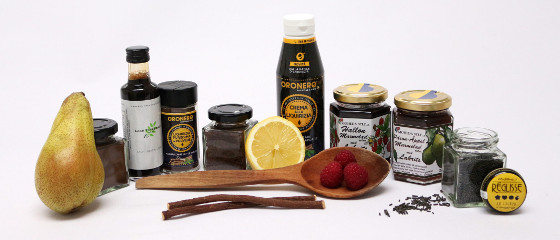
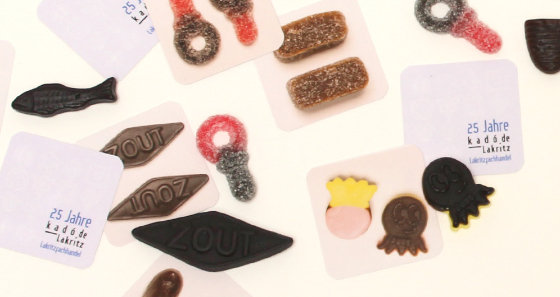
Liquorice companies choose their technical processes and develop recipes with their own individual Liquorice FlavourThe addition of flavourings enhances the smell and|or taste of a foodstuff; they are subject to labelling under the Foodstuffs Ordinance. A natural flavouring may only be described as such if it consists of 95 percent natural substance., which sets them apart from the competition in the Liquorice market. kadó sources Liquorice directly from manufacturers in Finland, Sweden, Denmark, Iceland, the Netherlands, Belgium, Germany, Italy, France and Spain! This showcases the culinary diversity of Europe, which is also reflected in Liquorice. If you want to taste the north-south contrast in Liquorice preferences, we recommend the scandinavian and sweet-tart mixes. With the kadó mix, you can try the whole range – let yourself be surprised!